The Boletín del Museo Chileno de Arte Precolombino is an indexed international academic journal published biannually in digital format. Founded in 1985, it provides a space for specialists from the social sciences, the arts, and the humanities to come together and engage in dialogue on the study of the art and cultures of the Indigenous peoples of the Americas, with particular attention to their Pre-Columbian visual and material aspects.
The Boletín publishes research articles, review articles, book reviews and interviews in Spanish and English on topics regarding archaeology, anthropology, rock art, ethnography, art history, visual arts, history, architecture, cognition, cosmology, philosophy, ecology, economics, ideology, musicology, technology, and related disciplines. Submissions combining two or more of these topic areas are especially welcome. In addition, a key value of the Boletín is the relevance and the technical and artistic quality of the material it publishes. Submissions are evaluated by external peer reviewers, independent of the editorial team, under a double-blind peer review process, and are accepted throughout the year. They are reviewed in the order in which they are received and published in the order in which they are accepted.
Since 2025, the Boletín del Museo Chileno de Arte Precolombino has been jointly published by the Museo Chileno de Arte Precolombino, Universidad Adolfo Ibañez, and Pontificia Universidad Católica de Chile. It is an Open Access publication that does not charge authors publication fees and is financially supported by these institutions. The legal representative of the journal is Cecilia Puga Larraín.
The contributions, together with the references, figures, audio and video materials they contain, are the sole responsibility of their authors. The views and opinions expressed therein do not necessarily reflect those of the publishing institutions.
For the purposes of the Boletín, the terms “authors” and “co-authors” refer exclusively to human individuals; AI tools cannot be credited as such (see AI Use Policy). By signing the Declaration of Scientific Integrity and Good Practice, authors accept responsibility for the accuracy, truthfulness, originality, and integrity of the work, including any parts generated using AI (see Declaration of Scientific Integrity and Good Practice).
Since 2016, the Journal has been an Open Access publication and has been published under the terms of the Creative Commons Attribution 4.0 International Licence (CC BY 4.0) (https://creativecommons.org/licenses/by/4.0/). Users are free to share (copy and redistribute the material in any medium or format) and adapt (remix, transform, and build upon the material) for any purpose, including commercially, under the following terms:
Attribution: Users must give appropriate credit, provide a link to the licence, and indicate if changes were made. They may do so in any reasonable manner, but not in any way that suggests the licensor endorses them or their use.
No additional restrictions: Users may not apply legal terms or technological measures that legally restrict others from doing anything the licence permits.
The Boletín is indexed in Web of Science (WoS) Arts & Humanities Core Collection; Scopus; ; Scopus; Open Access Journals (DOAJ); ERIH PLUS; SciELO-Chile; HAPI; Redalyc; Fuente Académica Plus – EBSCO; The Research Libraries Group, RLG; Anthropological Literature; Art Abstracts – EBSCO; Art Source – EBSCO; International Bibliography of Art; Art Index.
Metrics: JCR, SJR.
All correspondence with the Journal should be addressed to: boletin@museoprecolombino.cl
EDITOR-IN-CHIEF
SANJA SAVKIC SEBEK
Museo Chileno de Arte Precolombino
ssavkic@museoprecolombino.cl
EDITORIAL TEAM
MARCELO ALARCÓN ÁLVAREZ
Museo Chileno de Arte Precolombino
Coeditor
boletin@museoprecolombino.cl
CAROLE SINCLAIRE AGUIRRE
Museo Chileno de Arte Precolombino
Coeditora
csinclaire@museoprecolombino.cl
ALEXANDER SAN FRANCISCO ARAYA
Museo Chileno de Arte Precolombino
Coeditor
asfrancisco@museoprecolombino.cl
DEBRA NAGAO
Museo Chileno de Arte Precolombino
Coeditora
dnagao@museoprecolombino.cl
VÍCTOR JAQUE FAÚNDEZ
Museo Chileno de Arte Precolombino
Coeditor gráfico
vjaque@museoprecolombino.cl
ISABEL SPOERER VARELA
Museo Chileno de Arte Precolombino
Correctora de estilo
svisabel@yahoo.es
EDITORIAL COMMITTEE
FERNANDO GUZMÁN SCHIAPPACASSE
Universidad Adolfo Ibáñez,
Santiago, Chile
fernando.guzman@uai.cl
ROBERTO CAMPBELL TORO
Pontificia Universidad Católica de Chile,
Santiago, Chile
Roberto.campbell@uc.cl
MARÍA ISABEL ÁLVAREZ ICAZA
Universidad Nacional Autónoma de México
Ciudad de México, México
marisaail@comunidad.unam.mx
BAT-AMI ARTZI
Museo Chileno de Arte Precolombino,
Santiago, Chile
bartzi@museoprecolombino.cl
FELIPE ARMSTRONG BRUZZONE
Museo Chileno de Arte Precolombino,
Santiago, Chile
farmstrong@museoprecolombino.cl
EDITORIAL BOARD
IGNACIO ALVA MENESES
Museo Tumbas Reales de Sipán,
Lambayeque, Perú
alvameneses@yahoo.es
WARWICK BRAY
Institute of Archaeology
University College London,
Londres, Reino Unido
postmaster@wbray.plus.com
MARCO CURATOLA PETROCCHI
Pontificia Universidad Católica del Perú,
Lima, Perú
mcurato@pucp.pe
TOM D. DILLEHAY
Department of Anthropology Vanderbilt University,
Nashville, USA
tom.d.dillehay@vanderbilt.edu
CHRISTOPHER B. DONNAN
Department of Anthropology, University of California,
Los Angeles, USA
donnanmoche@gmail.com
DANAE FIORE
Consejo Nacional de Investigaciones Científicas y Técnicas,
Asociación de Investigaciones Antropológicas
Universidad de Buenos Aires, Argentina
danae_fiore@yahoo.es
ROBERTO LLERAS PÉREZ
Museo del Oro,
Bogotá, Colombia
rllerape@banrep.gov.co
XIMENA MEDINACELI
Instituto de Estudios Bolivianos
La Paz, Bolivia
xmedinaceli@hotmail.com
BENOÎT MILLE
Centre de recherche et de restauration des musées de France
Musée du Louvre
París, Francia
benoit.mille@culture.gouv.fr
ELÍAS MUJICA BARRERA
Instituto Andino de Estudios Arqueológicos,
Lima, Perú
eliasmujica@gmail.com
JOANNE PILLSBURY
The Metropolitan Museum of Art
Department of the Arts of Africa, Oceania and the Americas,
Nueva York, USA
joanne.pillsbury@metmuseum.org
MARÍA MERCEDES PODESTÁ
Sociedad Argentina de Antropología,
Buenos Aires, Argentina
mercedespodesta@yahoo.com
MATTHIAS STRECKER
Sociedad de Investigación del Arte Rupestre de Bolivia,
La Paz, Bolivia
strecker.siarb@gmail.com
CONSTANTINO M. TORRES
Art and Art History Department
Florida International University,
Westchester, Florida, USA
torresm@fiu.edu
ANDRÉS TRONCOSO
Departamento de Antropología
Universidad de Chile
Santiago, Chile
atroncos@uchile.cl
Textual Types Published by the Boletín
The Boletín publishes research articles, review articles, book reviews and interviews in Spanish and English. Contributions, with the exception of interviews, may be submitted at any time and will be published in the order of acceptance, with the dates of submission, acceptance and publication indicated on the first page.
Research Articles
The Boletín del Museo Chileno de Arte Precolombino defines a “Research article” as a manuscript that presents new findings or scientific knowledge. The submission must not exceed 9,000 words, including all sections (title, abstract and keywords in Spanish and English, author information, main text, notes, figure captions or audiovisual material captions, and references), and may contain a maximum of 15 figures (including photographs, diagrams, plans, maps and drawings), as well as audio and video materials. Articles will be evaluated through a double-blind peer review process, and the Journal will request at least three reviews of each submission. In cases where the reviewer expressly authorises this in the Evaluation Form, their identity may be disclosed to the authors.
Review articles
The Journal defines a “Review article” as a critical review of the literature, a research summary or a state-of-the-art review that examines, analyses, organises and discusses published information on a specific topic, without the need to present new experimental results. Reviews must be systematic, including an introduction outlining the objectives of the submission, methodology (how the information was selected, its sources and the materials included), development (analysis and integration of the information and discussion) and conclusions.
Manuscripts must have a minimum length of 3,000 words and a maximum of 5,000, including all sections (title, abstract and keywords in Spanish and English, author information, main text, notes, figure captions or audiovisual material captions, and references). They will be evaluated through a “double-blind peer review” process. However, in cases where the reviewer expressly authorises this in the Evaluation Form, their identity may be disclosed to the authors.
These contributions are subject to the same citation guidelines set out by the Journal for research articles (see Editorial Guidelines) and may feature up to six figures (including photographs, diagrams, plans, maps and drawings), as well as audio and video materials.
Book Reviews
The Boletín defines a “Book review” as a critical, evidence-based analysis of an authored or edited work. It should be placed in the context of the current state of the discipline, identifying the central argument and evaluating the strength of its reasoning, the methodology employed, its structure, and the quality of its sources. The review is expected to assess the work’s contribution to knowledge, highlighting both its strengths and any limitations, omissions or biases from an academic perspective. The reviewer should also place the work within the broader scholarly dialogue, explaining the debates to which it contributes, the audience that would benefit from it (specialists, students or researchers), and its practical or theoretical relevance. The text should provide specialists and general readers alike with sufficient information to determine whether the work is relevant, without having to read it beforehand.
Manuscripts must have a minimum length of 1,500 words and a maximum of 2,500, including all sections (title, author information, main text, notes, figure captions or audiovisual material captions and references). They will be evaluated through a “double-blind peer review” process. However, in cases where the reviewer expressly authorises this in the Evaluation Form, their identity may be disclosed to the authors.
Book reviews are subject to the same citation guidelines established by the Journal for research articles (see Editorial Guidelines). An image of the book cover must be submitted and, where considered appropriate by the author and/or the Journal, up to two additional images may be included.
Interview
The Boletín defines “Interview” as a conversation between two or more individuals on topics and disciplines relevant to the Journal (see the Journal Description). Manuscripts must have a minimum length of 2,000 words and a maximum of 4,500, including all sections (titles, author information, main text, notes, figure captions or audiovisual material captions and references). This type of contribution is not subject to peer review. Interviews may feature up to six figures, as well as audio and video materials, and are subject to the same citation guidelines established for research articles by the Journal (see Editorial Guidelines). Interviews are not accepted through open submission; instead, they are solicited by the Journal.
Manuscript Submission
Manuscripts must be submitted through Open Journal Systems (OJS), available on the website http://www.boletinmuseoprecolombino.cl. Authors submitting for the first time must register as users on the same platform. Receipt of a manuscript will be acknowledged by email and does not imply its admission to the editorial process. The Journal will notify authors as soon as possible whether their submission has been admitted to the editorial process.
All contributions, with the exception of interviews, will be evaluated through a “double-blind peer review” process by reviewers external to the Boletín in accordance with the process described above, following admission to the editorial process by the Editorial Committee. Following external review and receipt of the revised manuscript, the Editorial Committee will review it once again and make the final decision on its acceptance or rejection.
Acceptance of a submission does not guarantee publication, which remains subject to the Editorial Committee’s final decision. The editorial process may be discontinued at any stage in cases of breaches of academic integrity, conflicts of interest or inappropriate conduct towards the Editorial Team. The Boletín will keep authors informed of the progress of the editorial process to publication.
The editorial process takes, on average, 16 weeks. However, it may take longer depending on the authors’ responsiveness to the Journal’s requests, the availability of reviewers, and any modifications the submission might require.
Stages of the Editorial Process
1. Admission Stage: Manuscript Receipt and Admission Decision
- Confirmation of receipt of the manuscript.
- Possible requests for additional information or clarifications from authors by the Journal.
- Review by the Editorial Committee to determine whether the submission will be admitted to the editorial process.
- If admitted, the manuscript proceeds to the external review stage.
2. External Review and Revision Stage
- Review by external experts following the process described for each type of contribution.
- The Editorial Committee may provide comments and request changes to the manuscript as part of the review process.
- Notification of the review results to authors.
See Research Articles Form | Review Articles Form | Book Review Form
If accepted, the publication timeline will depend on the type of acceptance:
- Accepted for publication without modifications: the submission proceeds immediately to the editing, design and publication stage.
- Accepted for publication with minor modifications or substantial modifications: authors will have a period of six weeks (calendar days) to submit the revised manuscript, addressing the reviewers’ comments either by implementing the suggested changes or by providing a reasoned response. The period begins on the date on which the review results are sent by email. Together with the revised manuscript, authors must submit, in a separate file, a detailed summary of the revisions made, for which they will be provided with a template. The Journal will determine whether the comments provided during the external review have been addressed and whether the manuscript complies with the Boletín’s Editorial Guidelines, and may request further revisions from authors.
If the submission is rejected, the Journal will notify the authors and provide them with the evaluations that informed this decision.
3. Editing, Design and Publication Stage
- Editing of the submission. The Journal will assign an editor who will contact the authors to request their collaboration.
- Gallery Proofs. Once editing and design have been completed, the Journal will send the manuscript to the authors for review and approval. At this stage, the Boletín will only accept changes to formal aspects which, if not corrected, would seriously affect the publication.
- Publication on the Journal’s website and sending the final version to the authors together with the offprint of their contribution.
Research Originality and Integrity
Submissions must be unpublished and original throughout the Journal’s editorial consideration process, from receipt to publication. This means that they must not have been published in any academic or scientific journal, book, conference proceedings or similar publication, and must not be under editorial consideration for publication in another scientific journal, book chapter or conference proceedings.
Research Articles are considered original when they present new findings or scientific knowledge. Originality is determined by the novelty of the data, methods or discoveries, which must be clearly presented and supported by a sound methodology.
Review Articles are considered original when they offer an analysis, synthesis, perspective or reinterpretation of existing knowledge that is published for the first time. This may include a new approach or conceptual framework, a new research question, an innovative synthesis, or the identification of gaps and future lines of research, among other possibilities.
Book Reviews are considered original when they present the author’s critical and personal engagement with the work, placing it within a broader intellectual context. Originality is assessed through the author’s own interpretative thesis, critical and contextual positioning, reasoned evaluation, the identification of omissions or blind spots in the work, and the proposal of new implications or questions. None of these elements should have been previously published.
Submissions may derive from a thesis, have been published in an institutional or subject-specific preprint, or have been presented at a conference. In such cases, the version submitted to the Journal must have a different title. If they have been presented at a conference, this must be indicated in a section entitled “Acknowledgements”, which should be placed at the end of the manuscript before the References section. The following format is suggested:
– A preliminary version of this work was presented at the (name of the conference, including the edition number, city, country and year) under the title (title of the work in the language in which it was presented).
Authors are expected to adhere to the principles of research integrity set out in the Singapore Statements on Research Integrity (2010) (https://www.singaporestatement.org/guidance/singapore-statement), the Montreal Statement on Research Integrity in Cross-Boundary Research Collaborations (2013) (https://www.singaporestatement.org/guidance/montreal-statement), as well as those of the Committee on Publication Ethics (COPE) ) (www.publicationethics.org) and the Vermillion Accord on Human Remains (1989) (https://worldarchaeologicalcongress.com/code-of-ethics/).
The Boletín will apply the guidance and procedures of COPE in addressing cases reported to or identified by the Editorial Team.
The Boletín reviews submitted manuscripts using specialised software that identifies degrees of similarity with other published texts. In addition, it reserves the right to use AI tools for this purpose, in accordance with the Journal’s published policies (see AI Use Policy).
Authors are responsible for securing the legal right to publish the submitted material, particularly with regard to figures, audio, video and any other data protected by the applicable legislation in their respective countries.
See Formalities and Style Guide for Authors
Dissemination and Visibility of Published Articles
The Journal will promote published articles through all its digital social media channels.
Authors are encouraged to promote their work through their own social media and professional networks. They may also include a reference to their work in repositories (for example, https://researcheracademy.elsevier.com/) and on any websites to which they have access.
Manuscripts must be submitted through Open Journal Systems (OJS), available on the website http://www.boletinmuseoprecolombino.cl. Authors submitting for the first time must register as users on the same platform
The text should be submitted in a word-processing format compatible with Microsoft Word, with its pages numbered.
Authors must submit a single manuscript file that includes all tables, figures, audio files and videos, together with their explanatory captions, inserted in the appropriate places within the text.
All figures, audio files, videos and other audiovisual material included in the work must be submitted as separate files. The minimum required resolution for figures is 300 dpi.
Research Articles must not exceed 9,000 words, Review Articles should be between 3,000 and 5,000 words, Book Reviews between 1,500 and 2,500 words, and Interviews between 2,000 and 4,500 words. In all cases, all sections of the work must be taken into account when calculating the total word count.
First Page of Research and Review Articles
The first page must include the title of the article (up to 130 characters, including spaces), an abstract of no more than 250 words, and three to seven keywords (different from those appearing in the title), all provided in both English and Spanish. English and Spanish translations will be duly reviewed and, where necessary, revised according to technical criteria under the supervision of the Editor.
This page must also contain the following information about the author(s): first name(s) and surname(s), institutional affiliation (institution, city and country), Open Researcher and Contributor ID (ORCID), and email address.
First Page of Book Reviews
The first page must include the following information in the following order: title of the reviewed work; details of the review author: institutional affiliation (institution, city and country), Open Researcher and Contributor ID (ORCID), and email address; publication details of the work: editor(s), where applicable, city and publishing entity or press, year of publication, number of pages, and dimensions (width, height, depth).
Headings
The title and subheadings of manuscripts must be concise, particularly the subheadings. The Editor reserves the right to modify them where necessary. Primary, secondary and tertiary headings must be clearly structured and differentiated, either through font size, the use of bold type, or numbering.
Notes
Footnote references in the text must be indicated consecutively using Arabic numerals in superscript, which should always be placed after a punctuation mark, ideally a full stop or a paragraph break. Notes must appear at the end of the document. Excessive use of notes should be avoided, and their length should be limited. The Journal may shorten notes that are excessively long or suggest new ones where necessary.
In-text Citations
Paraphrasing is preferred to direct quotations, unless the latter are strictly necessary.
Citations must correspond exactly to the original work cited, without updates or modifications (unless they are explicitly indicated), and the same edition of the publication referenced must be cited.
If a quotation is in a language other than that of the article, it must be provided in its original language, and the author must provide a translation in a note at the end of the text, identifying the translator (first name(s) and surname(s)). If the translation is the author’s own, it must be indicated as follows: (Chamorro 2013: 115; author’s translation).
If a direct quotation is up to 40 words in length, it must be incorporated into the text and enclosed in quotation marks. Quotations exceeding 40 words must be separated from the main text by a blank line, use a typeface two points smaller than the main text, be indented from the left margin, and not be enclosed in quotation marks. In both cases, quotations must be referenced in the bibliography, including page numbers, as in the following example: (Cruzat 1898: 174). Notes should not be used for this purpose unless the quotation requires additional clarification or commentary. In such cases, the endnote number should appear immediately after the reference: (Betancourt et al. 2000: 312).¹
When an author is mentioned in the text, the year of publication of the work should be given in parentheses after the surname, together with the page number if required: “Pablo Cruzat (1898: 174) states that…”. In such cases, authors are requested to use the author’s full name at the first mention; thereafter, the surname alone may be used.
When citing a work by two authors, both authors’ surnames should be included (Irribarren & Bergholz 1972). For works by more than two authors, the first author should be named followed by et al.: (Betancourt et al. 2000: 312).
When several publications are cited within the same parenthesis or comment, they must be arranged chronologically.
When citing Artificial Intelligence, the name of the developing company and the year must be indicated: “OpenAI (2026) states that…”; “…is a useful tool for structuring research (Google 2026).”
Acknowledgements and Funding Informatio
When a work includes acknowledgements or funding information, this information should be placed immediately before the References section. Example:
This work was conducted as part of FONDECYT Project No. 1181844, Sonidos serranos. De la Tirana a Paucartambo: santuarios, musicalización y danzas en el paisaje sonoro, 2018. Principal Investigator: Alberto Díaz Araya.
References
A list of works must be included under the heading “References”. The list must be limited exclusively to references cited in the text, notes, figure captions, tables, audio files and videos. This list must be organised alphabetically by author, with single-author works listed first, followed by works with two authors and then those with more than two authors. In the case of two or more works by the same author(s), they must be arranged chronologically.
The bibliographic information for each reference must be complete and must be organised as follows: author(s), year of publication, title in italics, printer or publisher. Other information, such as editor(s), page numbers, volume, etc., should be added when the reference corresponds to a chapter in a book, journal article, or similar publication. If the work has a DOI, it must be included; where the work is available online, the URL of the original source and the date of access must be indicated.
Examples:
BOOKS
Murra, J. 1978. La organización económica del Estado Inca. Siglo XXI.
Bertonio, L. 1956 [1612]. Vocabulario de la lengua aymara. Ceres.
Books with more than one author:
Schultes, R. & A. Hofmann 1933. Plantas de los dioses. Orígenes del uso de los alucinógenos. Fondo de Cultura Económica.
Jaramillo, L., E. Ramos & J. Ramos 2023. Arqueología regional en el Cauca Medio. La ocupación humana prehispánica en Filandia. University of Pittsburgh.
Books edited, coordinated, or directed by others:
Bueno, P. & J. Soler 2020 (Eds.). Ídolos: miradas milenarias. Museo Arqueológico de Alicante.
Maicas, R., C. Cacho, E. Galán & J. Martos 2010 (Coords.). Ojos que nunca se cierran. Ídolos en las primeras sociedades campesinas. Ministerio de Cultura.
CHAPTERS OR ARTICLES WITHIN BOOKS
Kubler, G. 1981. Period, Style and Meaning in Ancient American Art. En Ancient Mesoamerica, J. Graham, ed., pp. 11-23. A Peek Publication.
ARTICLES IN JOURNALS
Espinosa, M. 2015. Afrochilenos en Arica: identidad, organización y territorio. Antropologías del Sur 2 (3): 175-190.
Conklin, W. 1983. Pukara and Tiahuanaco Tapestry: Time and Style in a Sierra Weaving Tradition. Ñawpa Pacha 21: 1-44.
ARTICLES IN CONFERENCE PROCEEDINGS
Irribarren, J. & H. Bergholz 1972. El camino del Inca en un sector del norte chico. En Actas del vi Congreso de Arqueología Chilena, H. Niemeyer, ed., pp. 229-266. Universidad de Chile-Sociedad Chilena de Arqueología.
MANUSCRIPTS
Ancient manuscripts (do not include the abbreviation “Ms.”)
Sahagún, B. de. 1558-1585. Códices Matritenses. Vol. 3, Real Biblioteca de Madrid, II-3280. <http://bdmx.mx/documento/galeria/bernardino-sahagun-codices-matritenses> [consultado: 07-02-2022].
Recent manuscripts that have not yet been published (must include the abbreviation: “Ms.”)
Sinclaire, C. 2004 Ms. Ocupaciones prehispánicas e históricas en las rutas
del despoblado de Atacama: primera sistematización. Informe parcial arqueológico, Proyecto FONDECYT Nº 10400290.
DISSERTATIONS, DEGREE SEMINARS, OR THESES
Vilches, F. 1996. Espacio y significación en el arte rupestre de Taira, río Loa,
II Región de Chile: un estudio arqueoastronómico. Memoria de Título en Arqueología, Universidad de Chile, Santiago.
After indicating the author, the year and the title, the following should be stated as appropriate:
– Undergraduate thesis, (University).
– BA thesis, (University).
– MA, (University).
– PhD diss., (University).
ARCHIVES
They are cited in the body of the text, in parentheses, with all the relevant details. Example:
(AHL, Tarapacá, Legajo 419, 1797, f. 4v.).
They are listed immediately before the References, in a separate section titled ‘Archives’, alongside their acronym and name. Example:
AAA, Archivo Arzobispal de Arequipa.
AOI, Archivo Obispado de Iquique.
ANS, Archivo Nacional de Chile
CARTOGRAPHY
Instituto Geográfico Militar 2003. Carta Regular de Chile “Conchi”, Escala 1:50.000. Santiago: Instituto Geográfico Militar. <https://www.igm.cl/ventas-
Escalas.php?tab=Regi%C3%B3n%20De%20Tarapac%C3%A1&sec-
=2&numero=42&escala=4> [consultado: 20-09-2021].
Biblioteca Nacional Digital 2017 [1899]. Mapa geográfico e histórico del Perú. Escala 1:6.000.000. Santiago: DIBAM.<http://www.bibliotecanacionaldigital.-
gob.cl/bnd/631/w3-article-354288.html> [consultado: 20-09-2021].
OBJECTS FROM A COLLECTION
Metropolitan Museum of Art. s.f. Tunic Fragment. Número de acceso: 1979.206.394. <https://www.metmuseum.org/art/collection/search/312615> [consultado: 06-22-2023].
Royal Ontario Museum. s.f. Mantle Fragment. Número de objeto: 931.11.1. <https://collections.rom.on.ca/objects/389336/mantle-fragment?ctx=37201a2b-e8ed-45ab-8808-0398ffb9a48f&idx=0> [consultado: 04-14-2023].
AUDIOS, FILMS AND VIDEOS
Multimedia resources (audio and video files) must be appropriately cited in the text using the corresponding label and numbered consecutively, for example: (audio 1), (audio 2) or (video 1), (video 2), as applicable.
- Example of an audio file in the References section:
Sarmiento, R. 2018. Grito de lucha final. 5:1 min. Producción independiente.
- Example of a video file in the References section:
Herrera, C. & G. Jofré 2018. En Mendoza los pueblos originarios piden la restitución del guardián del Aconcagua. Raices Ancestrales, Youtube, 16:41 min. <https://www.youtube.com/watch?v=1MCipc4WNTA> [consultado: 20-05-2020].
“IN PRESS” PUBLICATIONS
Instead of the year, it says: Forthcoming. Example:
Zubieta, L. Forthcoming. Rock Art and Memory in the Transmission of Cultural Knowledge. Springer.
ARTIFICIAL INTELLIGENCE
The developer company, year, model name, version and date accessed must be provided. Examples:
OpenAI. 2026. ChatGPT (GPT-4o). Large language model [accessed: 21-03-2026].
Google. 2026. Gemini (version 1.5 Pro). Artificial intelligence model [accessed: 17-04-2026].
Figures
Research articles may include a maximum of 15 figures, review articles up to six, book reviews up to three (including the cover of the work being reviewed), and interviews up to six. Figures include photographs, diagrams, plans, maps and drawings.
All of these are referred to as “figures” and must be cited in the text in abbreviated form: (fig. 1), (figs. 3–7). They must be numbered sequentially, in the same order in which they are cited in the text, and placed immediately after their first mention in the manuscript.
Figure captions should be brief (no more than 30 words) and include the corresponding credits: source of the figure, modifications, author of the photograph or drawing, object number where applicable, holding institution, etc.
Figures must be inserted in the manuscript in low resolution, together with their corresponding captions. In addition, they must be submitted separately in the resolution required by the journal (300 dpi).
All pieces or objects must include a scale bar, either within the image itself or in its caption. Maps, plans and drawings must include a graphic scale, and the dimensions of the object depicted must be provided. When the photograph itself constitutes the object, the dimensions of the photograph must also be indicated.
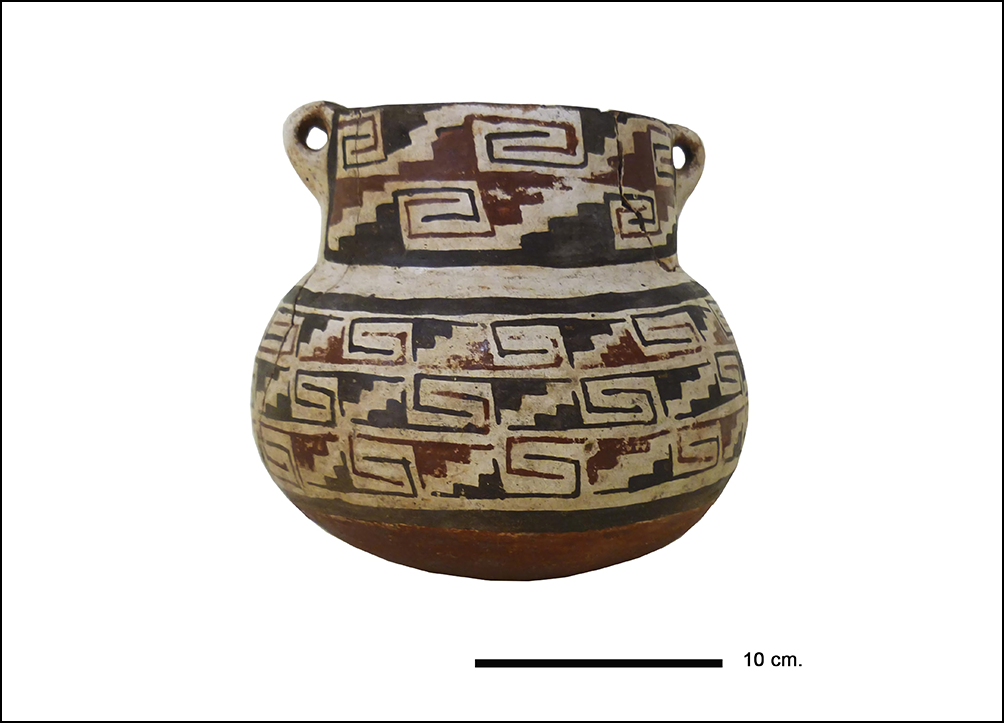
Figure 5. Pot. Object under study (photo by the author).
Original figures must have a minimum resolution of 300 dpi. Their technical and artistic quality is an important criterion for the acceptance and publication of the article.
The Journal will be responsible for designing the maps. Authors must provide a preliminary version clearly indicating the points, locations or areas they wish to highlight. In addition, they must submit a copy of the map image without the information layers.
Example of a map with information Example of a map without information
layers. layers.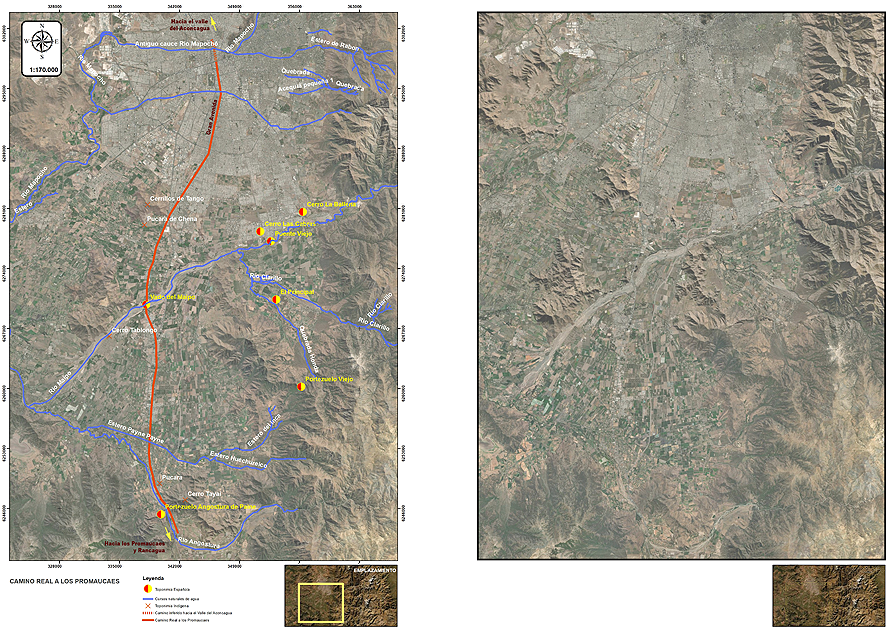
The same requirement applies to figures with information layers:
Example of a map with information Example of a map without information
layers. layers.

Tables
Tables and charts (graphs) must be included within the manuscript, be properly cited in the text (e.g. Table 1), and placed immediately after their first mention. They must be identified by a brief descriptive title and numbered sequentially using Arabic numerals.
Audio and Video
Authors must identify the audiovisual resource to which they are referring in accordance with the editorial guidelines and indicate the location in the manuscript where the hyperlink to the resource should appear. For example: ‘The celebration begins with the proclamation of the alférez (Audio 1).’ In the References section, these works must include the appropriate credits. In addition, audio and video files must be submitted in high-resolution audio and video.
Supplementary Material
Authors may submit supplementary material such as datasets referred to in the manuscript (figures, audio, video, tables, etc.), which must be accompanied by an appropriate description. Authors must explicitly indicate where in the manuscript the hyperlink to the resource should appear. Supplementary material must be submitted as a separate file and is subject to the same editorial guidelines as those governing text, tables, figures, audio and video.
Authors must declare in the manuscript the sources of funding (projects), the funding body, the project title, and the year in which the funding was awarded.
This work was conducted as part of FONDECYT Project No. 1181844, Sonidos serranos. De la Tirana a Paucartambo: santuarios, musicalización y danzas en el paisaje sonoro, 2018. Principal Investigator: Alberto Díaz Araya.
Examples of other relevant circumstances that should be declared include:
- Research funded by a mining company, forestry company, or other commercial organisation.
- Research arising from a doctoral thesis.
- Research prioritised or authorised by a community.
- Research sponsored by government institutions.
LAuthors must also indicate whether:
- The work has been presented at a conference, seminar, or similar event.
- The work is derived from a thesis (thesis title, discipline, degree, institution).
These matters are addressed in the Declaration of Scientific Integrity and Good Practice, which authors must sign and submit together with the manuscript.
The Editorial Committee of the Boletín del Museo Chileno de Arte Precolombino (ISSN: 0718-6894) requires that manuscripts be original and not under editorial consideration by another journal or book, as stated in the General Guidelines.
Where authors use their own or third-party material that has been published previously, it must be properly cited and referenced in accordance with the editorial guidelines of the Journal.
The Boletín follows a strict anti-plagiarism policy and therefore screens all submitted manuscripts using specialised software that identifies the degree of similarity with previously published works. Evidence of plagiarism will result in the rejection of the manuscript.
Authors are responsible for ensuring that they hold the legal right to publish the proposed material, particularly figures, audio, video, and any other data protected by the legislation in force in their respective countries. Authors retain copyright and unrestricted full publishing rights.
For the purposes of the Boletín, the terms “author” and “co-author” refer exclusively to human individuals. AI tools are not recognised as authors or co-authors (see AI Use Policy). Authors are ultimately responsible for all content contained in manuscripts under editorial consideration and, by signing the Declaration of Scientific Integrity and Good Practice, accept responsibility for the accuracy, truthfulness, originality, and integrity of the work, including any parts generated using AI (see Declaration of Scientific Integrity and Good Practice).
Authors must explicitly disclose the use of AI tools whenever information obtained through them (including responses, ideas, formulations, suggestions, or corrections) has made a substantial contribution to the scholarly work.
Authors may adjust the brightness, contrast, or colour balance of graphic or audiovisual material, provided that such adjustments do not conceal or remove information present in the original. However, the use of generative AI or AI-assisted tools to create or substantially alter original images in submitted manuscripts is not permitted. Likewise, images that duplicate or refer to existing copyrighted images, real individuals, identifiable third-party products or brands, or any individual’s voice must not be generated.
Basic grammar, spelling, and punctuation checks or improvements do not require disclosure.
The Journal requests that reviewers disclose whether they have used AI to assist in the review process and, if so, how it was used. Reviewers are also asked to avoid using AI tools that do not guarantee the confidentiality required when processing and transmitting the contents of a scientific manuscript. This requirement is intended to safeguard the confidentiality of the works under review.
The Boletín reserves the right to use appropriate tools for detecting the use of AI, conducting the preliminary assessment of manuscripts, and streamlining the editorial process. Any such use will be expressly disclosed in the published work.
Authors must read and sign the Declaration of Scientific Integrity and Good Practices, through which they acknowledge their understanding of the journal’s editorial policies, rights, and obligations—which, in turn, adhere to the principles of research integrity outlined in the Singapore Statements on Research Integrity (2010) (https://www.singaporestatement.org/guidance/singapore-statement), the Montreal Statement on Research Integrity in Cross-Boundary Research Collaborations (2013) (https://www.singaporestatement.org/guidance/montreal-statement), as well as the Committee on Publication Ethics (COPE) (www.publicationethics.org).
For the treatment of human remains, the Journal adheres to the Vermillion Accord on Human Remains (1989) (https://worldarchaeologicalcongress.com/code-of-ethics/), which authors are required to follow.
- Respect for the mortal remains of the dead shall be accorded to all, irrespective of origin, race, religion, nationality, custom or tradition.
- Respect for the wishes of the dead concerning disposition shall be accorded whenever possible, reasonable and lawful, when such wishes are known or can reasonably be inferred.
- Respect for the wishes of the local community and of the relatives or guardians of the dead shall be accorded.
- Respect for the scientific value of skeletal, mummified and other human remains (including hominid fossils) shall be accorded whenever such value is demonstrated.
- Agreement on the disposition of fossil, skeletal, mummified and other remains shall be reached through negotiation based on mutual respect for the interests of communities in the appropriate disposition of their ancestors and for the legitimate interests of science and education.
- Express recognition that the legitimate concerns of ethnic groups, as well as those of the scientific community, shall be respected will make possible acceptable and honourable agreements.
The Boletín will apply the guidance and procedures of COPE in addressing cases reported to or identified by the Editorial Team.
The Journal maintains a triple digital preservation policy supported by the Museo Chileno de Arte Precolombino, Universidad Adolfo Ibáñez, Pontificia Universidad Católica de Chile, and the administration of the Boletín website.
The Journal is published under the Creative Commons Attribution 4.0 International CC BY 4.0 (https://creativecommons.org/licenses/by/4.0/deed.en) Licence. Users are free to:
- Share: copy and redistribute the material in any medium or format.
- Adapt: remix, transform, and build upon the material for any purpose, including commercially.
Under the following terms:
- Attribution: Users must give appropriate credit, provide a link to the licence, and indicate if changes were made. They may do so in any reasonable manner, but not in any way that suggests that the licensor endorses them or their use.
- No additional restrictions: Users may not apply legal terms or technological measures that legally restrict others from doing anything the licence permits.
The Boletín del Museo Chileno de Arte Precolombino defines artificial intelligence (AI) as “a machine-based system that, for explicit or implicit objectives, infers, from the input it receives, how to generate outputs such as predictions, content, recommendations, or decisions that can influence physical or virtual environments”.¹
The following guidelines concern the use of these technologies in the preparation of manuscripts submitted to the Boletín and complement its existing ethical standards, regulations, and editorial policies.
These guidelines have been developed with reference to guidance issued by Elsevier, the STM Association’s Task and Finish Group on AI Labelling Terminology for Research Content Declaration, the International Committee of Medical Journal Editors (ICMJE), and Chile’s National Artificial Intelligence Policy (Chile IA).²
These AI guidelines will be reviewed and updated periodically in line with developments in AI technologies.
1. Authors
For the purposes of the Boletín, the terms “author” and “co-author” refer exclusively to human individuals. AI tools are not recognised as authors or co-authors. Authors are ultimately responsible for all content contained in manuscripts submitted for editorial consideration and, by signing the Declaration of Scientific Integrity and Good Practice, accept responsibility for the accuracy, truthfulness, originality, and integrity of the work, including any parts generated using AI (see Declaration of Scientific Integrity and Good Practice).
The use of AI tools must be disclosed when the information obtained through them (including responses, ideas, formulations, suggestions, or corrections) contributes substantially to the manuscript. This must be disclosed in the methods section of the manuscript, specifying the purpose of the AI tool’s use and identifying the sections of the work or the aspects to which it was applied. In addition to relevant ideas or information, this includes the substantial generation or editing of tables, graphs, illustrations, and audiovisual materials. Within the main text, the developer and year should be cited, for example, (OpenAI 2026). In the References section, authors should provide the developer, year, model name, version, and date of access, for example: OpenAI. 2026. ChatGPT (GPT-4o). Large language model [accessed: 22-07-2026].
Routine grammar, spelling, and punctuation checks or corrections do not require disclosure.
Authors are responsible for verifying the terms and conditions of any AI tools they use to ensure the privacy and confidentiality of their data and contributions, including personally identifiable information, as well as both published and unpublished manuscripts.
Authors must verify the accuracy of AI-generated content and check for factual errors and potential biases arising from the use of AI.
Use of AI in Graphic and Audiovisual Material
Authors may adjust the brightness, contrast, or colour balance of graphic and audiovisual material, provided that such adjustments do not conceal, remove, or otherwise alter information contained in the original material.
Authors may also use generative AI or AI-assisted tools where these form part of the research design or methodology (AI-assisted imaging approaches used to generate or interpret the underlying research data). Such use must be disclosed in the methods section, explaining how the generative AI or AI-assisted tools were used in the creation or modification of the image, together with information about the AI tool in accordance with the requirements set out in these guidelines.
Images must not duplicate or imitate existing copyrighted images, depict or imitate real individuals, or reproduce identifiable third-party products or brands. Nor may AI be used to generate or imitate any individual’s voice.
The use of generative AI or AI-assisted tools to create or alter original images included in submitted manuscripts is also prohibited. This includes enhancing, concealing, moving, removing, or introducing any specific feature within an image or figure.
For the purposes of editorial assessment, the Boletín may request that authors provide the original versions of the images prior to any AI-assisted adjustment.
Reviewers
The Boletín asks reviewers to disclose whether they have used AI in the review process and, if so, to explain how it was used, bearing in mind that the AI may currently produce incorrect, inaccurate, or incomplete results.
To preserve the confidentiality of the manuscript, reviewers must avoid using AI tools that do not guarantee the appropriate level of confidentiality when processing and transmitting the data contained in a scientific work.
The Journal
The Boletín reserves the right to use appropriate tools to detect the use of AI in order to safeguard the integrity of the information contained in the methods, findings, and conclusions of submitted manuscripts.
The Boletín may also use AI tools for the preliminary assessment of manuscripts in order to determine whether their principal scientific contribution has been published previously, detect potential plagiarism, or identify possible conflicts of interest.
To facilitate the editorial process with regard to style, grammar, and structure, the Boletín reserves the right to use AI tools to improve article titles and abstracts, subject to final approval by the authors. These tools may also be used during the editing of an accepted manuscript, including the adaptation of tables and figures and the verification of cited references.
Any use of AI tools by the Boletín will be carried out under human supervision, will be subject to final human approval, and will be expressly disclosed in the published work.
— — —
1. https://legalinstruments.oecd.org/en/instruments/OECD-LEGAL-0449.
2. https://www.elsevier.com/about/policies-and-standards/the-use-of-generative-ai-and-ai-assisted-technologies-in-writing-for-elsevier; https://s3.eu-west-2.amazonaws.com/stm.offloadmedia/wp-content/uploads/2025/04/23020709/STM_AI_Classification_Recs_19_Sept2025-1.pdf: https://www.icmje.org/news-and-editorials/icmje-recommendations_annotated_jan24.pdf; https://www.minciencia.gob.cl/areas/inteligencia-artificial/politica-nacional-de-inteligencia-artificial/